By Lindsay Powers | Nutritional Therapist & Health Writer, Naturally Healthy News
Published: August 2026 | Last reviewed: August 2026
If your feed has recently filled up with people weighing porridge, counting chickpeas, and adding a scoop of something to their smoothie, you’ve met “fibremaxxing”, the trend name for deliberately maximising daily fibre intake. Fibre is a type of carbohydrate the body can’t fully digest, and it turns out this unglamorous nutrient has quietly become one of 2026’s biggest food trends, with search interest in fibre-related content climbing sharply over the summer.
The good news is that, unlike a lot of nutrition trends, this one is worth taking seriously. The less good news is that most of us have a genuine gap to close, and doing it too quickly can backfire. Here’s what fibremaxxing gets right, and how to do it without the bloating that gives it a bad name.
Quick Summary
- Most adults, in the UK, US and beyond, fall well short of recommended daily fibre targets, often by close to half
- Fibre slows digestion, which helps sustain fullness alongside protein, not instead of it
- Different types of fibre (soluble, insoluble) do different jobs, so variety matters more than any single food
- Increasing fibre too quickly is the main cause of the bloating that puts people off
- A gradual increase of around 5g a week, with plenty of water, avoids most of the discomfort
What Is “Fibremaxxing”? A New Name for an Old Idea
Strip away the hashtag and fibremaxxing is simply the deliberate effort to eat more fibre through whole foods, and sometimes supplements, rather than leaving it to chance. It’s not a new discovery so much as a rebrand of advice nutritionists have given for decades, dressed up for a generation that responds better to a trend than a food pyramid.
What’s genuinely useful about the trend is the attention it’s bringing to a nutrient most people underestimate. Fibre rarely gets the spotlight that protein has had over the past few years, despite arguably deserving just as much of it when it comes to feeling satisfied after meals.
Why Fibre Keeps You Fuller for Longer
Fibre works on fullness in a similar way to protein: it slows things down. Soluble, viscous fibres, found in oats, beans, and psyllium, form a gel-like substance in the gut that delays gastric emptying and the release of glucose into the bloodstream. This gives satiety hormones like GLP-1 and PYY more time to signal to the brain that a meal has landed. We cover this hormonal side of fullness in more depth in our article on why protein keeps you full for longer, and the two nutrients genuinely work best together rather than as competing strategies.
Fibre fermented by gut bacteria also produces short-chain fatty acids, including butyrate, which some research suggests may further stimulate these same fullness signals. It’s an area still being studied, but it adds another layer to why a fibre-rich meal tends to feel more satisfying than a low-fibre one of the same size. For a closer look at butyrate specifically, see our article on what sodium butyrate is good for.
The Global Fibre Gap: Why Almost Everyone Falls Short
This shortfall isn’t specific to any one country, it shows up almost everywhere fibre intake has been studied, though the exact numbers vary by region:
- UK: the Scientific Advisory Committee on Nutrition recommends 30g a day for adults. National Diet and Nutrition Survey data cited by the British Nutrition Foundation and British Dietetic Association puts the average intake at around 18g, with fewer than one in ten adults meeting the target
- US: recommendations range from 25g a day for women to 38g for men, depending on age and calorie needs. Research presented by the American Society for Nutrition found the average American eats around 15g, with fewer than one in ten adults meeting their personal target
- Elsewhere: most Western dietary guidelines converge on a similar range, generally 25 to 30g a day for adults, and survey data from most of these countries tells a similar story: actual intake usually sits at roughly half the recommended amount
The consistency of this gap across very different food cultures suggests it has more to do with the shift toward refined, low-fibre convenience foods across modern diets generally than with any single country’s eating habits.
This gap matters beyond appetite. Fibre-rich diets are consistently linked with better long-term digestive and metabolic health, which is likely part of why the topic has resonated so widely this year.
Not All Fibre Works the Same Way
Fibre isn’t a single ingredient, and different types genuinely do different jobs, which is why variety matters more than fixating on one “hero” food:
- Soluble, viscous fibre (oats, beans, lentils, psyllium): forms a gel in the gut, slows digestion, and is most closely linked to fullness and steadier blood sugar
- Insoluble fibre (wholegrains, vegetable skins, nuts): adds bulk and supports regular digestion, though it has less of a direct effect on satiety
- Fermentable fibre (found in onions, garlic, chicory and many legumes): feeds gut bacteria and supports short-chain fatty acid production
Most whole plant foods contain a mix of these, which is one reason nutritionists tend to recommend a variety of fibre sources rather than one supplement doing all the work.
Fibre, Blood Sugar and Cravings
Because soluble fibre slows the release of glucose into the bloodstream, it also plays a role in blunting the blood sugar swings that can drive cravings later in the day. We explore this cycle, and why a blood sugar dip often shows up as a sudden urge for something sweet, in our article on why we crave sugar.
Doing It Well: How to Increase Fibre Without the Bloat
The bloating and discomfort that give high-fibre eating a bad reputation are almost always down to speed, not fibre itself. Gut bacteria need time to adjust to a bigger fibre load, and a sudden jump from 15 to 20g to 30g in a day or two is a fairly reliable way to feel uncomfortable. The NHS’s own guidance on increasing fibre intake reflects this: raise it gradually rather than all at once, and drink plenty of fluids as you go.
- Increase gradually: aim for around an extra 5g a week rather than overhauling every meal at once
- Drink more water as you go: fibre needs fluid to do its job properly, and low water intake is a common cause of increased bloating and constipation, not less
- Spread it across the day: a fibre-heavy breakfast followed by two low-fibre meals is a harder adjustment than smaller amounts at each meal
- Favour food first: whole foods bring fibre alongside vitamins, minerals and plant compounds that an isolated supplement won’t provide
Simple Ways to Add More Fibre Each Day
Many of the best fibre sources double up as the same slow-releasing carbohydrates that support steady energy, which we cover in our article on the best carbohydrates for energy. A few easy swaps:
- Swap white bread, rice and pasta for wholegrain versions
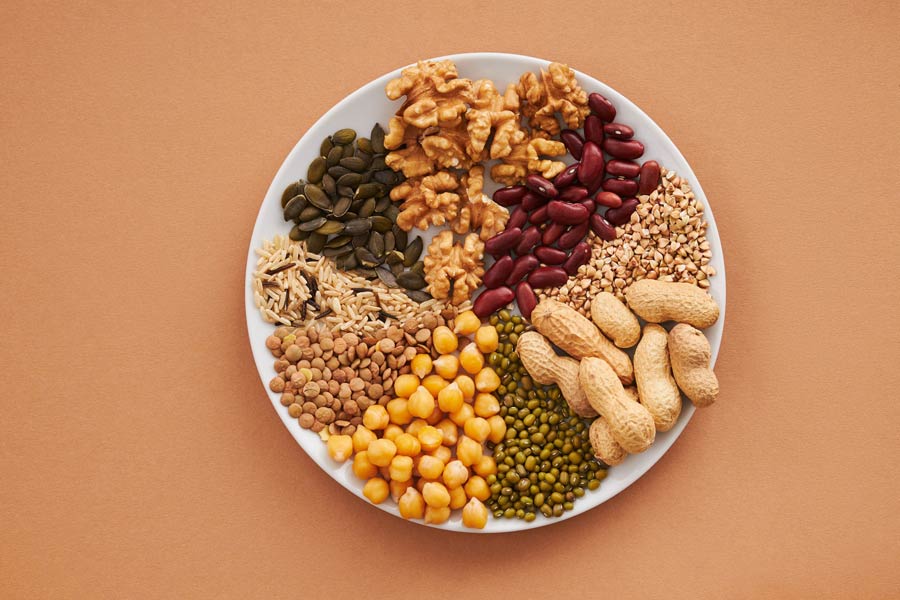
- Add a handful of beans, lentils or chickpeas to soups, salads and curries
- Leave the skin on potatoes, apples and other fruit and vegetables where possible
- Add a tablespoon of ground flaxseed or chia seeds to porridge or yoghurt
- Snack on nuts, seeds or fruit rather than heavily processed alternatives
Who Should Be Extra Careful
For most people, the challenge is eating too little fibre rather than too much. However, a sudden, large increase can cause genuine discomfort for anyone with a sensitive gut, and people with conditions such as IBS may need a more gradual, individually tailored approach, ideally with input from a dietitian. Fibre supplements can also interact with the absorption of certain medications, so it’s worth checking with a pharmacist or GP if you take regular medication and plan to add a supplement rather than food-based fibre.
Frequently Asked Questions
How much fibre should I actually be eating?
It depends slightly on where you live and your calorie needs, but the ranges converge: UK guidance recommends 30g a day for adults, while US guidance ranges from 25g (women) to 38g (men). Most people, in the UK, the US and elsewhere, currently eat closer to 15 to 20g, so for many, the realistic goal is a gradual increase towards the higher end of these ranges rather than an overnight jump.
Why does eating more fibre cause bloating?
Bloating from increased fibre intake is usually caused by a rapid increase without enough water, giving gut bacteria too little time to adjust. Increasing fibre gradually, alongside plenty of fluid, avoids most of this discomfort.
Is a fibre supplement as good as fibre from food?
Supplements can help close a gap, but whole foods provide fibre alongside vitamins, minerals and plant compounds that isolated supplements don’t replicate. Food-first is the general recommendation, with supplements as a helpful top-up rather than a replacement.
Does fibre really help with fullness the way protein does?
Yes, though through a slightly different route. Soluble fibre slows digestion and supports the release of fullness hormones such as GLP-1 and PYY, working alongside, rather than instead of, protein’s own effect on satiety.
Final Thoughts: A Trend Worth Keeping
Most nutrition trends fade because they oversell a small effect. Fibremaxxing is a rare exception, mostly because it isn’t really selling anything new. It’s a hashtag pointed at a genuine, long-standing gap between what people eat and what actually supports steady energy, fullness and digestive health.
The version worth keeping isn’t the extreme one. It’s the boring, gradual, food-first version: a bit more fibre most days, spread across meals, with enough water to go with it.
Learning Hub
References
- British Nutrition Foundation. Fibre — Nutritional Information.
- British Dietetic Association. Food Fact Sheet: Fibre.
- Scientific Advisory Committee on Nutrition (SACN). Carbohydrates and Health Report, 2015.
- NHS. How to Get More Fibre Into Your Diet.
- American Society for Nutrition. Most Americans Are Not Getting Enough Fiber in Our Diets, 2021.
- Harvard T.H. Chan School of Public Health / Harvard Health. Should I Be Eating More Fiber?
Disclaimer: The information in this article is intended for general informational purposes only and does not constitute medical advice. It is not a substitute for professional medical advice, diagnosis, or treatment. Always seek the advice of your GP or a qualified healthcare provider with any questions you may have regarding a medical condition. Never disregard professional medical advice or delay seeking it because of something you have read here.