Every year, billions are spent on diets, injections, apps, surgeries and weight loss supplements, yet long-term success remains elusive for many people. But the most interesting breakthroughs do not always come from the latest trend or pharmaceutical innovation. Sometimes they come from foods that have been quietly supporting human health for thousands of years.
This is the case with turmeric and its active compound curcumin. A study published in the Journal of Nutritional Biochemistry in 2015 suggested that curcumin may help convert white fat into brown fat, potentially influencing metabolic health in several meaningful ways. With metabolic issues rising sharply in the past decade, it feels like exactly the right moment to revisit this research through a modern lens.
Key Takeaways:
Curcumin and Weight Management
- Weight gain is rarely caused by a single factor. Modern lifestyle pressures affect metabolism, inflammation, gut health and energy regulation.
- Research suggests curcumin may influence metabolic pathways linked to fat behaviour, mitochondrial activity and inflammation.
- A 2015 laboratory study found that curcumin encouraged white fat cells to behave more like brown fat cells at a cellular level.
- These findings help explain how curcumin could support metabolic health, but they do not prove direct or guaranteed weight loss in humans.
- Curcumin appears most relevant when used alongside lifestyle foundations such as daily movement, balanced nutrition, gut support and metabolism-friendly routines.
The Hidden World of Body Fat Explained
Most of us grew up thinking body fat was simply body fat. A storage system for unused calories, something to avoid and something we wanted less of. But research over the past twenty years has revealed that body fat behaves more like a dynamic organ than a passive storage unit. Different types of fat have completely different roles and can influence health in surprising ways.
White Fat: The Storage System That Expands Easily
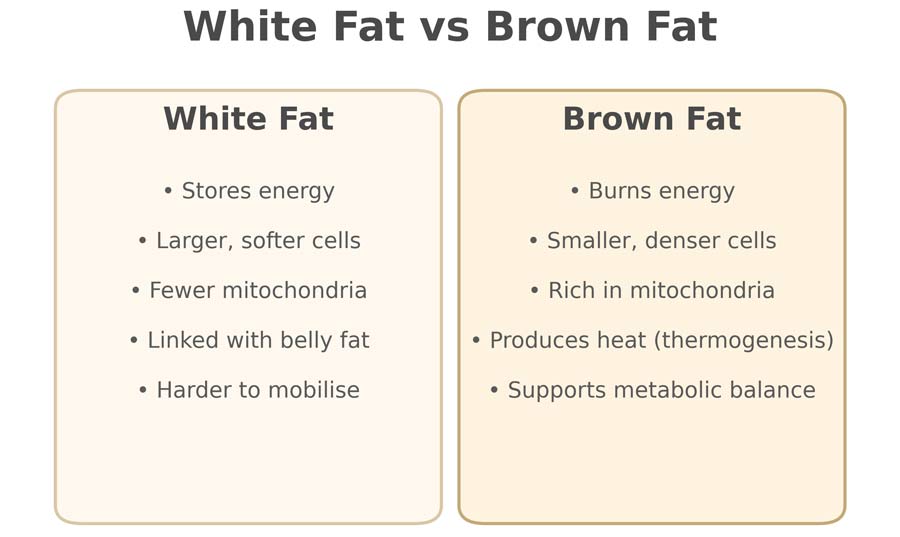
White fat is the type most associated with weight gain, belly fat and energy storage. These fat cells expand when we eat more than we burn and contract when the body mobilises stored energy. They play a role in hormone signalling and immunity, but too much white fat, especially around the abdomen, is strongly linked with inflammation, poor metabolic flexibility, reduced energy and cardiovascular concerns.
Adults with overweight or obesity carry mostly white fat. This type of fat behaves like a long-term storage facility, so it is slow to shift and often resistant to short-term dieting.
Brown Fat: The Metabolic Engine We Want More Of
Brown fat behaves in a completely different way. It is rich in mitochondria, which gives it a darker appearance and allows it to burn energy rather than store it. Babies have a high amount of brown fat to help regulate temperature, and adults retain pockets of it around the neck, spine and kidneys.
People with more active brown fat often:
- Feel warmer naturally
- Have a more stable appetite
- Show better blood sugar control
- Tend to show higher resting energy expenditure
- May find weight management easier over time
Brown fat acts like a natural metabolic engine humming quietly in the background. It is not about weight loss in isolation. It is about supporting the body so it can work the way it was designed to.
Beige Fat: The Adaptable Middle Ground
Perhaps the most interesting discovery is that some white fat can convert into beige fat. Beige fat behaves more like brown fat under certain conditions, such as exposure to cold, regular exercise and specific nutrients. This is called fat browning, and it creates an opportunity to influence metabolic health through lifestyle choices and food-based compounds. This is where curcumin becomes especially interesting from a mechanistic perspective.
 Cold Exposure Can Turn White Fat Brown, But It Is Not for Everyone
Before the curcumin study gained attention, cold exposure was one of the few known ways to activate brown fat. Ice baths, cold showers and spending time in cooler rooms all trigger thermogenesis. This approach has become popular in the past few years, but for many people it is uncomfortable, impractical or simply unappealing.
Cold therapy can also pose risks for individuals with certain cardiovascular conditions, and even for those who are perfectly healthy; consistency tends to drop once winter sets in or life becomes busy.
This led researchers to ask an important question. Could we trigger the fat-browning process using a natural compound that is safe, affordable, and easy to incorporate into daily life?
In 2015, a team of Korean scientists found evidence that the answer might be yes.
The 2015 Curcumin Study That Deserves a Second Look
The study, titled Curcumin induces brown fat-like phenotype in 3T3-L1 and primary white adipocytes, explored how curcumin affects white fat cells. What they discovered captured the attention of researchers in metabolism and nutrigenomics.
Curcumin appeared to encourage white fat cells to behave more like brown fat cells through several interconnected mechanisms.
Curcumin switched on brown-fat-associated genes
The researchers found that curcumin influenced the expression of genes involved in brown fat activity. This is an example of epigenetic influence. Curcumin did not change DNA, but it altered how certain genes behaved, nudging the cell machinery towards a more metabolically active profile.
Curcumin promoted mitochondrial biogenesis
Mitochondria are responsible for energy production, and brown fat is rich in them. Curcumin appeared to trigger the creation of new mitochondria, which improves the cell’s ability to burn energy. Mitochondrial biogenesis has implications far beyond weight management. It supports muscle performance, brain function and healthy ageing.
Curcumin encouraged fat breakdown while reducing new fat formation
The study found that curcumin increased markers associated with fat breakdown while decreasing markers involved in fat creation. This suggests a shift in cellular signalling towards fat utilisation and reduced fat storage at the cellular level.
Curcumin activated AMPK, the metabolic master switch
AMPK is a key regulator of energy balance. It is activated by exercise, intermittent fasting and certain beneficial plant compounds. When AMPK is active, the body tends to regulate energy use and glucose handling more efficiently. Curcumin appears to influence this pathway in a supportive way.
Curcumin reduced inflammatory activity inside fat tissue
Obesity and chronic inflammation are closely interconnected. Curcumin’s well-studied anti-inflammatory properties may help improve the internal environment of fat tissue, supporting healthier metabolic signalling.
Taken together, these findings suggest that curcumin may influence metabolic health through two interconnected pathways. This helps explain why curcumin continues to attract interest as part of a whole-body approach to metabolic health.
Before we go further, it helps to clarify what this type of research can (and cannot) tell us.
Understanding the Evidence Behind This Study
What this study was
This was a laboratory-based study carried out on cultured white fat cells (adipocytes). It is considered preclinical research, meaning it explored biological mechanisms rather than direct effects in humans.
What it suggests
The findings suggest that curcumin may influence pathways linked to fat browning, mitochondrial activity, inflammation and metabolic signalling. These mechanisms are relevant to metabolic health and help explain how curcumin could support weight management as part of a wider lifestyle approach.
What it does not prove
This study does not show guaranteed or direct weight loss in humans. Human outcomes depend on many factors, including diet, activity levels, metabolic health, dosage and bioavailability, and should not be inferred from a single cell-based study alone.
Why This Study Matters More Now Than It Did in 2015
A decade ago, this study was an interesting insight into how plant compounds can influence fat cell behaviour. Today, it feels remarkably timely. Our metabolic environment has shifted dramatically, and what once seemed like a niche piece of research now speaks directly to some of the biggest health challenges of the modern world.
Metabolic conditions have increased dramatically since 2015
More people are experiencing issues with weight gain, energy, inflammation and blood sugar regulation than ever before. Ultra-processed foods have become even more dominant in the average diet, and sedentary behaviour has increased with remote work, digital lifestyles and reduced daily movement. These shifts place extra pressure on the body’s metabolic systems, making gentle, natural metabolic support more important than ever.
Interest in brown fat has grown since the study was published
In 2015, research on brown fat was still emerging. Today, it is a recognised area of metabolic science. Studies continue to explore how brown fat influences energy expenditure, insulin sensitivity and overall metabolic flexibility. There is growing awareness that increasing brown fat activity does not simply relate to weight control but plays a broader role in maintaining a healthy internal environment. This has helped renew interest in curcumin for weight loss, particularly as more people look toward natural metabolic support that also benefits wider wellbeing.
Lifestyle factors that suppress brown fat have become more common
Indoor heating, long periods sitting down, irregular eating patterns, chronic stress and disrupted sleep all reduce brown fat activation. The modern environment can make the body less efficient at burning energy, even when diet quality improves. This makes natural compounds that support metabolic pathways even more valuable.
There is rising interest in natural metabolic support alongside other strategies
The past few years have seen a surge in interest in weight-loss injections and pharmaceutical solutions. While these may have a place for some individuals, many people prefer natural, long-term approaches that support health without relying solely on medication. Curcumin fits into this landscape by offering gentle, multi-pathway support that works with the body rather than overriding it.
A decade of additional research strengthens the original findings
Since 2015, a significant amount of new research has emerged on curcumin’s influence on inflammation, mitochondria, the gut-brain axis, mood and cardiovascular health. These newer studies reinforce the idea that curcumin supports metabolic systems in multiple ways. When we revisit the original browning study with this expanded context, it becomes even more compelling.
How Curcumin Fits Into a Whole Body Approach to Weight Management
Curcumin is not a magic fix, but it is a valuable ally. NHN always emphasises a broader lifestyle foundation that makes metabolic change achievable.
Support the microbiome to regulate appetite and cravings
Gut health influences everything from hunger hormones to mood. The microbiome plays a major role in inflammation and metabolic signalling. Curcumin supports gut integrity and microbial diversity. Our article on curcumin and the gut-brain axis explores how gut health, mood and metabolic signalling are closely connected.
Balance blood sugar and inflammation through everyday food choices
Eating more whole foods, colourful vegetables, healthy fats, and fibre helps stabilise blood glucose. Reducing ultra-processed foods lowers inflammation and helps the body respond better to natural compounds like curcumin.
Use intermittent fasting as a structured metabolic tool
Intermittent fasting stimulates AMPK, the same pathway influenced by curcumin. The two approaches complement each other well, especially when introduced gradually and safely. Our intermittent fasting guide for metabolic health offers a practical breakdown of methods, timings and sustainability.
 Move the body daily, especially through low-intensity walking
Walking is one of the most effective ways to activate brown fat, regulate blood sugar and improve mitochondrial health. It supports cardiovascular function, reduces inflammation and boosts mood. It also pairs perfectly with curcumin because both influence energy production from different angles. Our article on the health benefits of walking for metabolism explains why this simple habit supports blood sugar control, mitochondrial health and fat utilisation.
Protect muscle mass during fat loss
Healthy weight loss involves maintaining or increasing muscle mass while reducing unhealthy fat. Curcumin’s influence on mitochondria pairs well with nutrients like krill oil, which may help preserve strength during weight loss. Our article on krill oil and muscle preservation during weight loss explores how maintaining muscle supports long-term metabolic health.
Together, these steps create an internal environment that allows curcumin to work more effectively.
Why Turmeric Alone Is Not Enough
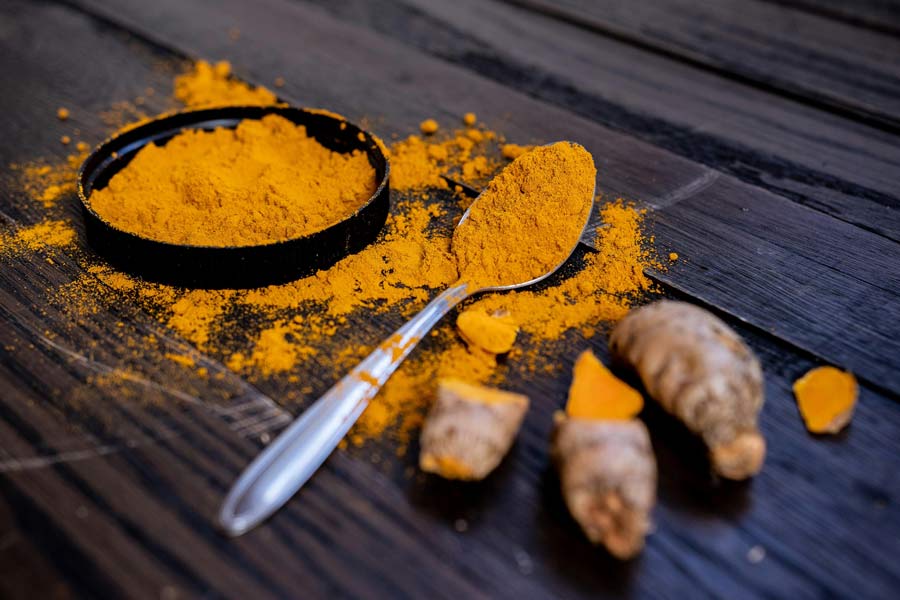
Turmeric root contains only a small amount of curcumin, and much of it is not absorbed efficiently when consumed on its own. To achieve the effects explored in research, a concentrated and bioavailable extract is typically required.
Some formulations are designed to improve absorption by pairing curcumin with lipids or phospholipids, helping it pass more effectively through the digestive system and into circulation. This approach aims to overcome curcumin’s naturally low bioavailability without relying on high doses.
This is why turmeric used in cooking can be a valuable part of a healthy diet, but is unlikely on its own to deliver the levels of curcumin studied in research settings.
Curcumin’s Other Metabolic Advantages
Curcumin does far more than influence the behaviour of fat cells. Its benefits extend across multiple systems that are closely tied to long-term metabolic resilience. When these systems are supported, weight may be easier to manage, energy may feel steadier, and the body is better able to respond to lifestyle changes. These broader effects help explain why interest in curcumin has continued to grow, as they address the underlying factors that influence how we feel and function every day.
Improved blood sugar control and metabolic flexibility
Beyond fat cell behaviour, curcumin has also been studied for its potential effects on glucose metabolism and insulin sensitivity. A systematic review of preclinical research found that curcumin was frequently associated with improved insulin sensitivity, lower blood glucose and reduced inflammatory markers in diabetes models. While much of this evidence comes from animal studies, it helps explain why human research has explored curcumin’s role in metabolic health and glycaemic control.
Healthy blood sugar balance supports stable energy, appetite regulation and metabolic flexibility. By supporting insulin sensitivity and glucose handling, curcumin may help reduce metabolic strain and support a smoother shift towards using stored energy when needed.
Better liver function for more efficient fat metabolism
The liver plays a central role in how the body processes fats, detoxifies compounds and manages hormonal signals related to appetite and metabolism. Curcumin is widely researched for its antioxidant and inflammation-modulating properties, which may support healthy liver function. When the liver functions well, the body is better equipped to break down fats and reduce the likelihood of visceral fat accumulation.
Enhanced mood and cognitive clarity that support behavioural change
Low mood, stress and emotional eating can undermine even the most carefully planned wellness routines. Curcumin supports neurotransmitter pathways and helps calm inflammatory signals that influence mood. This can make it easier to follow through with healthy habits, stay consistent and maintain a positive mental framework around diet and lifestyle choices.
Reduced joint discomfort for easier movement
Daily movement is one of the most important tools for better metabolic health, yet it becomes harder when joints feel stiff or uncomfortable. Curcumin’s soothing properties can help support joint comfort, making activities such as walking, stretching or gentle exercise more accessible. Even small increases in movement can significantly improve metabolic outcomes over time.
Improved cardiovascular health to support energy and stamina
A healthy cardiovascular system helps the body deliver oxygen and nutrients where they are needed. Curcumin supports normal circulation and endothelial function, which can lead to better stamina and more comfortable exercise. Moving the body becomes easier, and the benefits of physical activity build more naturally over the long term.
Together, these broader effects highlight why curcumin is more than a single-focus supplement. It supports multiple layers of metabolic wellness that help create a foundation for better energy, improved resilience and a healthier weight over time.
So Can Curcumin Help With Weight Loss
Curcumin is not a fast solution, but it is a meaningful one. Its influence on fat behaviour, mitochondria, inflammation and metabolic signalling means it can support the body in a steady, sustainable way. Curcumin may play a supportive role in weight management when combined with daily walking, improved nutrition, intermittent fasting and gut support, making it part of a long-term strategy for stronger metabolic health.
Sometimes, the most powerful answers are not the newest discoveries. They are the ones that make even more sense each time we revisit them.
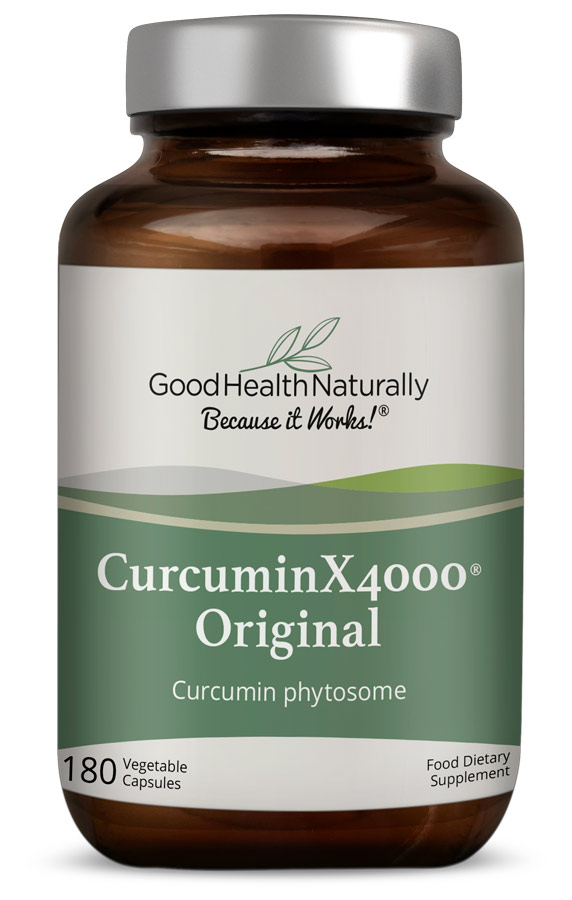
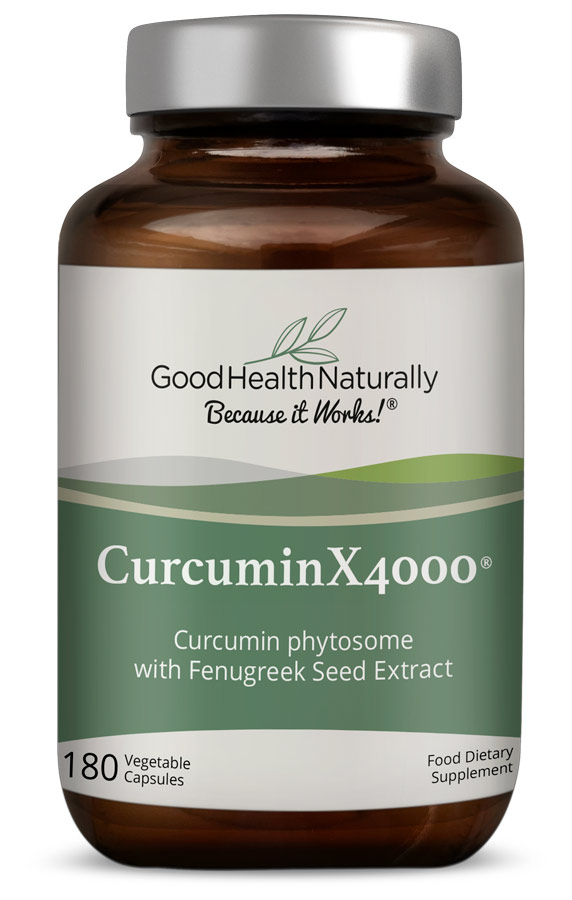
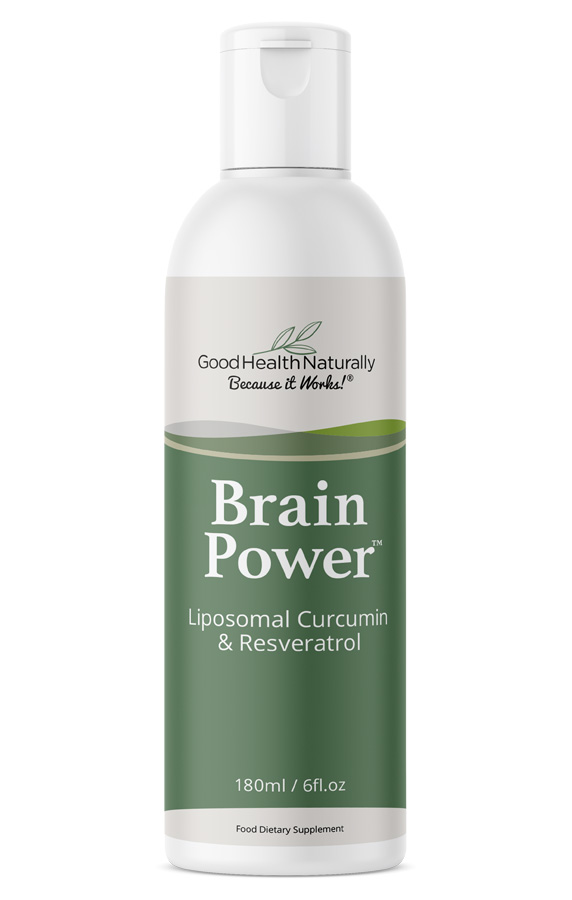
If you are considering adding curcumin to your routine, explore the range of high-quality options available from Good Health Naturally. Each formula is designed to support overall wellbeing and fits easily into a balanced lifestyle.
Does curcumin directly burn fat?
Curcumin does not burn fat in a stimulant-like way. It influences how fat cells behave and supports cellular processes that contribute to improved metabolic health.
Can turmeric powder provide the same benefits?
Turmeric contains curcumin, but in small amounts. Standardised extracts with enhanced absorption are more effective for metabolic support.
How long does it take to notice changes?
Most research shows benefits after eight to twelve weeks of consistent use, although some people notice improvements in inflammation or energy sooner.
Is curcumin safe to take long-term?
Yes. Curcumin has been used for centuries and has an excellent safety profile when taken at recommended amounts.