
Last week, we welcomed in the New Year with insights and recommendations from Lucy. We hope it inspired you to think more about supporting local growers and independent businesses.
This week, we’re still focusing on New Year habits but shifting attention to exercise. Is exercise or moving more one of your New Year’s intentions? It usually is for me. Each year, I promise myself I will do a little more. Walk more. Be more consistent. Find a better rhythm. I’m off to a good start so far with longer walks before work! I hope to keep this up, even on those chilly winter mornings.
Although January is often framed as a time to become a ‘new you’, I find it works better for myself and most people as a time to reconnect with simple habits that already fit real life. By the second week of the month, the pressure of step targets, fitness challenges and bold resolutions can start to feel overwhelming rather than motivating.
This is where some reassuring research offers a more helpful perspective.
If you already use a fitness tracker, it can be genuinely useful for prompting awareness, encouraging movement and breaking up long periods of sitting. But focusing only on hitting a daily step number may be missing something important.
What the Research Is Showing
A large study using UK Biobank data followed more than 33,000 adults for almost ten years. All participants were considered moderately inactive, averaging 8,000 steps or fewer per day. Instead of looking only at total step counts, researchers examined how those steps were accumulated.
People who took most of their steps in very short bursts, such as quick trips around the house or brief walks to the car, had significantly higher risks of cardiovascular disease and early death than those who walked for longer, uninterrupted periods. This was true even when total daily step counts were similar.
Benefits began to appear when walking sessions reached around 10 minutes, with the strongest protection seen in people who regularly walked for 15 minutes or more at a time.
Why Walking Pattern Matters
Longer walking sessions allow the body to shift into a different physiological state. Blood vessels release nitric oxide, improving circulation. Heart rate stays elevated long enough to strengthen the heart muscle. Metabolism gradually shifts toward using more fat for fuel, supporting steadier energy and blood sugar control.
Short bursts of movement still count, but they rarely last long enough to trigger these deeper cardiovascular adaptations.
What This Means for January
This is not about abandoning step counts or dismissing everyday movement. All of it still matters. But if you use a tracker, it may help to shift the focus slightly.
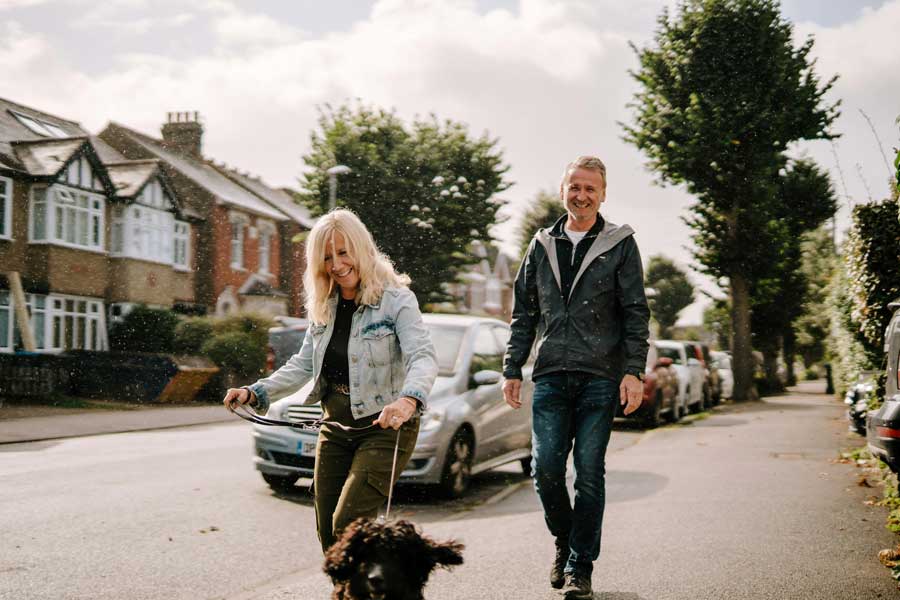
Rather than chasing an arbitrary number, aim to include one intentional walking session most days. Ten to fifteen minutes is enough to start. A morning walk can support energy and focus. An evening walk may help digestion and sleep.
A More Grounded Goal
January does not need extremes. It does not need perfection. It needs steadiness. A short walk you enjoy and can repeat is far more powerful than a perfect plan that never quite fits. Used gently, fitness trackers can support awareness rather than pressure. Even if you don’t use one, applying the same principles of longer bursts of walking is important.
Small, realistic habits built now tend to last far longer than ambitious resolutions.
If you’d like to explore the research in more detail and learn how to structure walking sessions for the greatest benefit, you can read more in our walking feature here.