Last week, we went back in time a bit, looking at how modern medicine came to sideline so many natural approaches. This week, I want to bring things right back to the present, and to something you can actually put on your plate today.
You’ve probably heard of GLP-1 by now, mostly in the context of weight-loss jabs. What tends to get left out of that conversation is that GLP-1 is a hormone your own gut makes every single time you eat. So the question isn’t whether you have it, it’s whether your meals are actually helping it do its job.
The Hormone Behind Feeling Full
When you eat, your gut releases GLP-1 alongside another hormone called PYY, and together they tell your brain you’ve had enough. Protein foods are one of the strongest natural triggers for this. They also digest more slowly than carbs or fat, so that the fullness signal lingers rather than spiking and fading fast.
There’s an added bonus, too: protein simply takes more energy for your body to process, so you’re quietly working a little harder just by eating it.
Where Most of Us Fall Short
What the research keeps pointing to is that most of us load the bulk of our protein into dinner, leaving breakfast and lunch fairly light. That imbalance may also leave us feeling less satisfied after breakfast and lunch, making mid-afternoon hunger and cravings more likely.
Many experts now suggest that healthy older adults may benefit from around 1.0–1.2 g of protein per kilogram of body weight each day to help support muscle maintenance. For many people, that works out at somewhere between 75g and 100g of protein daily, depending on body size and activity levels. Just as importantly, aiming to spread that protein more evenly across the day appears to be more effective than consuming most of it in a single evening meal.
What This Looks Like on My Plate
To make it a bit more real, here’s a typical day for me, where I try to include a good source of protein with every meal. It’s not the only way to do it, but it shows how spreading protein across the day can be easier than you might think:
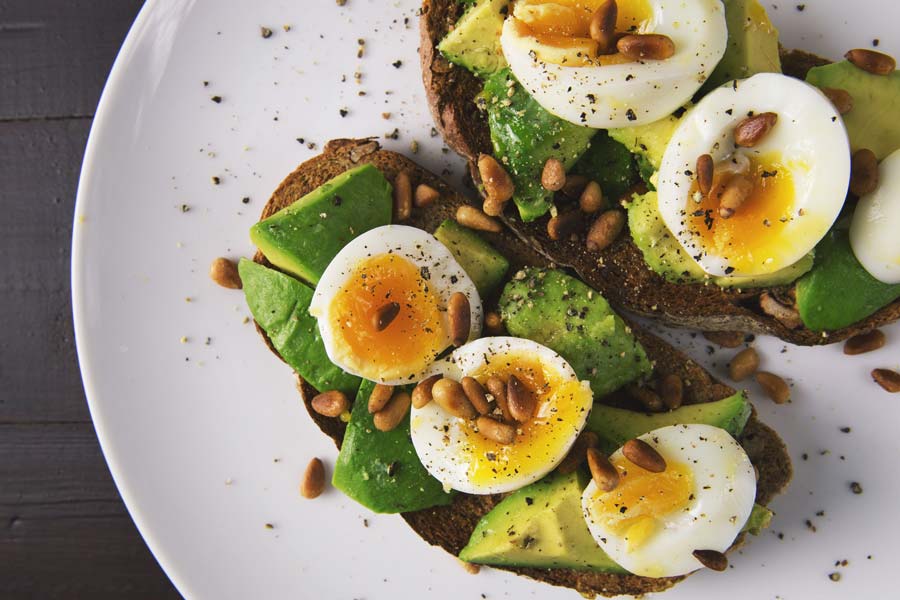
- Breakfast: Two or three eggs with spinach and half an avocado (around 15–21g protein), perhaps with a slice of wholegrain toast.
- Lunch: Grilled chicken, tinned salmon or tofu with chickpeas, over a big salad (~35g protein)
- Snack: Greek yoghurt with a spoon of nut butter (~15–20g protein)
- Dinner: White fish with vegetables (~30g protein), or tofu or lentils with brown rice and vegetables (~20–30g protein, depending on portion size).
Worth Trying This Week
A good place to start is to look at breakfast and lunch, as these are the two meals of the day that tend to be most protein-light. Try adding a good source of protein to each one, such as eggs, yoghurt, tinned fish, tofu or a handful of lentils or chickpeas. It’s a small change, but one that is most likely to see off that 3pm slump.
If you’d like the fuller picture on the hunger hormones and research behind it, I’ve written more here: Why Protein Keeps You Fuller for Longer
Little changes like these are generally achievable, and they add up over the week. Give it a try and let me know how you get on.
As always, if something here resonated or there is a topic you would like me to dig into, just hit reply. I read every message.