

What Happened to Natural Medicine, and Why Nobody Told You
We are halfway through the year. It feels like a natural moment to pause and to say something that sits behind much of what this newsletter has been building towards since January.
Every week, we cover sleep, nutrition, botanicals, lifestyle, and the science of ageing. Most of it sits outside what your GP discusses or what makes the mainstream health headlines. There is a reason for that, and it is rooted in a history most people have never been told.
In the early 1900s, natural medicine was not alternative. It was not fringe. Herbal, nutritional and botanical approaches were taught in medical schools across the United States alongside conventional practice. The idea that food, plants and lifestyle were central to health was not considered unusual. It was simply how medicine was practised.
Then, in 1910, a report changed everything.
The Flexner Report was a review of medical education commissioned by the Carnegie Foundation. On the surface, it was a push for higher standards, and some of what it recommended was reasonable. But it also systematically dismissed herbal, nutritional and natural approaches as irregular and unscientific. Medical schools that taught them lost funding and accreditation. Within a generation, most had closed, along with a number of schools serving Black and women medical students who were disproportionately affected by the new standards. The practitioners trained in natural traditions retired, and much of that knowledge stopped being passed through any official channel.
It is also worth knowing who was behind the report. The Carnegie Foundation had close ties to industrialists with growing interests in the emerging pharmaceutical sector, including John D. Rockefeller. Some historians argue this was no accident, that standardising medicine around patentable, drug-based treatments served those commercial interests well, while a natural, food-first approach could not be patented or scaled in the same way.
None of it happened because the research showed natural medicine did not work. In most cases, the research was simply never done. There was no commercial incentive to fund it. Whole areas of knowledge, accumulated over centuries, were quietly made to disappear, not because they lacked merit but because they lacked profit.
Why This Still Matters in 2026
The pharmaceutical industry has achieved genuinely extraordinary things. Nobody serious is arguing otherwise. But the dominance of drug-based medicine has come with a cost that is only now being properly examined. Chronic disease rates have climbed steadily throughout the era of modern medicine. Depression, obesity, type 2 diabetes, autoimmune conditions, cognitive decline: none of these are problems that pharmaceuticals have solved, and many are conditions where lifestyle, nutrition and natural approaches have a substantial and growing evidence base.
The research is there. It just tends not to be funded at the scale that drug trials are, it does not generate the same commercial returns, and it does not arrive via the channels that most people have been taught to trust. A study showing that magnesium supports sleep, or that a botanical reduces inflammation, will not be promoted by the same machinery that launches a new drug.
And it is not just funding. The platforms that now control what most people see, Google, Meta, YouTube, have systematically reduced the visibility of natural health content over recent years. Pages and accounts sharing evidence-based natural health information have been quietly demoted or removed. The mechanisms are different to 1910, but the effect is the same: the information exists, and it is being kept from the people who could benefit from it.
The same pressure is being applied directly to supplements and nutrients. Across the EU and UK, regulators have been moving to restrict dosages, remove certain compounds from sale and limit what manufacturers are even permitted to say about the health benefits of nutrients that have decades of research behind them. Vitamins, minerals, and botanicals that people have used safely for generations are being treated as risks that require restriction, while pharmaceutical products with far more significant side-effect profiles remain freely available.
This is part of why Naturally Healthy News exists. It was founded by Robert Redfern, who dedicated his life to making this knowledge accessible, and whose work myself and the team continue to carry forward. Not to dismiss modern medicine, and not to pretend that everything natural is automatically good or that everything pharmaceutical is automatically suspect. But to carry forward the evidence that exists, to translate the research that does not make headlines, and to take seriously a tradition of knowledge that was sidelined for commercial rather than scientific reasons.
Halfway through the year feels like a good moment to say that plainly. The topics we cover each week, sleep, biological ageing, nutrition, botanicals, and the lifestyle factors that shape how we age, are not niche interests or wellness trends. They are part of a much older understanding of health that predates the Flexner Report by centuries and that the science is increasingly catching up with.
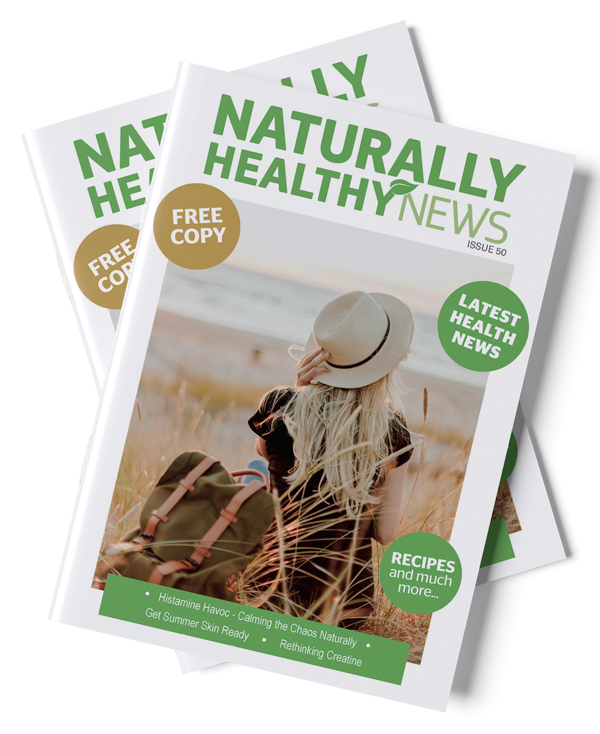
If you are new to the newsletter or if you want to explore more of what we cover, the latest issue of Naturally Healthy Magazine is a good place to start.
UK/EU Version
Rest of the world
If you’re new to Naturally Healthy News, or would simply like to revisit previous editions, you can explore a selection of recent issues here:
As always, if something here resonated or there is a topic you would like me to dig into, just hit reply. I read every message.
If you know someone who would find this useful, please do forward it on. The more people who have access to this kind of information, the better.