
By Lindsay Powers | Nutritional Therapist & Health Writer, Naturally Healthy News
Published: June 2026 | Last reviewed: June 2026
When it comes to taurine for eye health, the research findings are striking. Taurine is found in higher concentrations in the retina than in almost any other tissue in the body, yet it remains one of the most overlooked nutrients in vision support. From age-related macular degeneration to diabetic retinopathy and everyday visual fatigue, the evidence pointing to taurine’s essential role in eye health is compelling.
This article explores what taurine is, how it supports the retina and optic nerve, which conditions may benefit from adequate intake, and how to ensure you’re getting enough through diet or supplementation. For a broader overview of the nutrients and lifestyle habits that protect vision long term, see our guide to Eye Health and Vision Support.
Quick Summary
- Taurine is the most abundant amino acid in the retina and is essential for photoreceptor health
- Deficiency is linked to retinal degeneration, vision loss, and increased vulnerability to oxidative damage
- Older adults and those with diabetes are at higher risk of low taurine levels
- Shellfish, oily fish, and dark poultry meat are the richest dietary sources
What Is Taurine?
Taurine is a sulphur-containing amino acid found naturally throughout the body, with particularly high concentrations in the brain, heart, muscles, and eyes. Unlike most amino acids, it does not form proteins but instead plays a wide range of regulatory and protective roles at the cellular level.
The body can synthesise taurine from other amino acids, primarily methionine and cysteine, but dietary intake may be necessary to maintain the physiological levels required by high-demand tissues, particularly the retina. [1]
Taurine and the Retina: A Critical Partnership
The concentration of taurine in the retina is higher than in any other tissue in the body. More than 60% of the taurine in the retina is located in the outer nuclear layer, where photoreceptors (the rod and cone cells responsible for detecting light and colour) are found. [1]
Research consistently shows that taurine deficiency leads to retinal oxidative stress, apoptosis (programmed cell death), and degeneration of both photoreceptors and retinal ganglion cells. Conversely, adequate taurine supports retinal neuronal survival, synaptic connections, and the phagocytic activity of the retinal pigment epithelium (RPE), which is responsible for clearing away spent photoreceptor cells. [1]
Why Taurine Levels Decline With Age
One of the most clinically relevant findings in taurine research is the impact of ageing on levels. Studies show that healthy elderly individuals over the age of 61 can have a significant reduction in circulating taurine levels compared to younger adults. [1] This age-related decline coincides with the increased risk of conditions such as age-related macular degeneration (AMD) and glaucoma.
Beyond ageing, several other factors can reduce taurine status:
- Diabetes: excess glucose reduces taurine content in retinal pigment epithelial cells, and taurine levels are consistently lower in people with diabetes [3]
- Plant-based diets: taurine is found almost exclusively in animal foods, so vegans and vegetarians typically have lower circulating levels
- Certain medications: the antiepileptic drug vigabatrin has been shown to deplete taurine, causing retinal toxicity [4]
- Oxidative stress: chronic exposure to oxidative damage can deplete antioxidant reserves including taurine
Key Benefits of Taurine for Eye Health
Antioxidant Protection
The retina is one of the most metabolically active and oxygen-demanding tissues in the body, making it especially vulnerable to oxidative stress. Taurine acts as a powerful antioxidant, helping to neutralise free radicals and protect retinal cells from damage. Oxidative stress is now recognised as a major driver of most common eye diseases, including AMD and cataracts. [2]
Photoreceptor and Neuronal Survival
A 2024 review published in Neural Regeneration Research confirmed that taurine plays an essential role in the survival of retinal neurons, including photoreceptors and retinal ganglion cells. Animal studies have demonstrated that removing taurine from the diet causes photoreceptor loss, while reintroducing it can reverse retinal damage. [1] Researchers also found that taurine supplementation reduced glial activation, suppressed apoptosis, and preserved synaptic connections in animal models of retinal degeneration. [5]
Age-Related Macular Degeneration (AMD)
AMD is a leading cause of vision loss in older adults, primarily affecting the central retina. Given that taurine levels decline significantly with age and oxidative stress is a key driver of AMD, taurine has attracted considerable research attention as a potential protective nutrient.
A 2023 case report described long-lasting stabilisation and improvement in dry AMD following high-dose oral taurine supplementation, with measurable improvements in visual acuity sustained over three years. [6] While larger clinical trials are still needed, the evidence points to taurine as a promising nutraceutical for supporting macular health.
Diabetic Retinopathy
Diabetic retinopathy is one of the most common complications of diabetes and a significant cause of blindness worldwide. Elevated blood glucose reduces taurine concentrations in retinal tissue, increasing vulnerability to excitotoxic damage from glutamate accumulation.
Research has shown that dietary taurine supplementation can reduce the effects of diabetic retinopathy by counteracting this glutamate excitotoxicity. [3] For individuals managing diabetes, maintaining adequate taurine intake may therefore offer an additional layer of protection for the eyes. For more on how blood sugar management connects to overall health, including eye health, read our guide to blood sugar balance.
Glaucoma and Optic Nerve Protection
Glaucoma involves progressive degeneration of retinal ganglion cells (RGCs) and their axons, which make up the optic nerve. Taurine’s neuroprotective properties are relevant here: research has shown that taurine protects against the death of retinal ganglion cells both in laboratory settings and in animal models, and scientists anticipate that taurine-targeting strategies may become a focus for future neuroprotective therapies. [4]
Visual Fatigue
In our increasingly screen-dominated lives, visual fatigue is a growing concern. A 2023 systematic review in Nutrients highlighted evidence that appropriate doses of taurine may help to reduce visual fatigue, with the authors calling for greater recognition of taurine’s potential application in functional foods aimed at protecting eye comfort and performance. [7]
Dietary Sources of Taurine
Taurine is found almost exclusively in animal-based foods. Plants contain little to no taurine, which means that those following vegan or vegetarian diets may have consistently lower circulating levels.
The richest dietary sources include:
- Shellfish: scallops (~827 mg per 100 g), mussels (~655 mg), clams, oysters, and squid are among the most concentrated sources
- Oily and dark-fleshed fish: tuna, salmon, mackerel, and sardines provide substantial amounts; darker flesh generally means higher taurine content
- Dark poultry meat: dark turkey meat (~300 mg per 100 g) and chicken thighs (~170 mg) are significantly richer in taurine than white breast meat
- Red meat: beef, lamb, and pork provide moderate amounts (around 38 to 47 mg per 100 g); organ meats such as heart and liver are more concentrated
- Seaweed: nori can contain significant amounts but practical intake per serving is modest; useful for those on plant-based diets
There are currently no official daily intake guidelines for taurine, though some nutritional researchers suggest a target of around 400 mg per day for adults based on evidence for health benefits. Cooking does not significantly affect taurine levels in food.
Taurine Supplementation: Is It Worth Considering?
For those who eat limited amounts of seafood and meat, or for older adults and people with diabetes who may have an increased need, taurine supplementation is an option worth discussing with a healthcare professional or nutritional therapist.
Taurine supplements typically provide doses ranging from 50 mg to 2,000 mg per serving and are generally considered safe. The taurine used in supplements and fortified products is synthetically produced and therefore suitable for vegans and vegetarians. Taurine in a liquid spray is an alternative to capsules or powders.
As with all nutrients, supplements are most effective as part of a broader approach to eye health that includes a nutrient-dense diet, adequate hydration, UV protection, and regular eye examinations. They should complement, not replace, healthy dietary habits.
Frequently Asked Questions
Can taurine deficiency cause vision problems?
Yes. Taurine deficiency has been directly linked to retinal degeneration, photoreceptor damage, and the death of retinal ganglion cells in both animal and human research. Certain medications (notably vigabatrin) are known to deplete taurine and cause retinal toxicity as a side effect. People who eat very little animal protein, older adults, and those with diabetes are most at risk.
Is taurine the same as the ingredient in energy drinks?
Taurine is indeed a common ingredient in energy drinks, typically included at doses of around 750 mg per serving. However, energy drinks also contain high amounts of caffeine and sugar, which are not conducive to eye health or general wellbeing. If you want to increase taurine intake, whole food sources or a dedicated supplement are a far better approach than relying on energy drinks.
How much taurine do I need for eye health?
There is currently no official recommended daily intake for taurine, though nutritional researchers have suggested a target of around 400 mg per day for general health. Therapeutic doses used in research studies on eye conditions are typically higher. Speak to a registered nutritional therapist or healthcare professional if you are considering supplementation for a specific eye health concern.
Can vegans and vegetarians get enough taurine?
This is a genuine consideration. Plant foods contain virtually no taurine, and while the body can synthesise taurine from other amino acids, research consistently shows that vegans and vegetarians have lower circulating levels. Small amounts are found in some seaweeds, but not in quantities sufficient for meaningful supplementation via diet alone. Taurine supplements derived from synthetic sources are vegan-friendly and may be worth considering.
Final Thoughts: A Nutrient Worth Taking Seriously for Vision
Taurine’s role in eye health is firmly grounded in science, and yet it remains under-recognised compared to nutrients such as lutein or omega-3s. Its presence in the retina at uniquely high concentrations, its antioxidant properties, and the clear consequences of deficiency all make it a nutrient worth paying attention to.
Whether you are looking to protect your vision as you age, manage the ocular complications of diabetes, or simply reduce everyday visual fatigue, ensuring adequate taurine intake through diet, or supplementation where needed, is a practical and evidence-supported step.
For a comprehensive overview of all the key nutrients, lifestyle habits, and protective strategies that support long-term eye health, visit our full guide to Eye Health and Vision Support.
References
- García-Ayuso D, et al. Taurine: a promising nutraceutic in the prevention of retinal degeneration. Neural Regen Res. 2024;19(3):606–610. PMC10581579. https://pmc.ncbi.nlm.nih.gov/articles/PMC10581579/
- Caine JJ, Geracioti TD. Taurine, energy drinks, and neuroendocrine effects. Cleve Clin J Med. 2016;83(12):895–904. PMID: 27938518. https://doi.org/10.3949/ccjm.83a.15050
- Yu X, et al. Dietary taurine supplementation ameliorates diabetic retinopathy via anti-excitotoxicity of glutamate in streptozotocin-induced Sprague-Dawley rats. Neurochem Res. 2008;33(3):500–507. PMID: 17762918. https://pubmed.ncbi.nlm.nih.gov/17762918/
- Froger N, Moutsimilli L, Cadetti L, et al. Taurine: the comeback of a nutraceutical in the prevention of retinal degenerations. Prog Retin Eye Res. 2014;41:44–63. PMID: 24721186. https://pubmed.ncbi.nlm.nih.gov/24721186/
- García-Ayuso D, Martínez-Vacas A, Di Pierdomenico J, et al. On the potential therapeutic role of taurine in retinal degenerative diseases. Acta Ophthalmol. 2024;102. https://doi.org/10.1111/aos.16332
- Artigas F, et al. Long-lasting stabilisation and improvement of dry age-related macular degeneration by a high oral taurine dose. J Ophthalmol Adv Res. 2023;4(3):1–5. https://doi.org/10.46889/JOAR.2023.4306
- Duan H, Song W, Guo J, Yan W. Taurine: a source and application for the relief of visual fatigue. Nutrients. 2023;15(8):1843. PMID: 37111062. https://pmc.ncbi.nlm.nih.gov/articles/PMC10142897/
Disclaimer: The information in this article is intended for general informational purposes only and does not constitute medical advice. It is not a substitute for professional medical advice, diagnosis, or treatment. Always seek the advice of your GP or a qualified healthcare provider with any questions you may have regarding a medical condition. Never disregard professional medical advice or delay seeking it because of something you have read here
Sponsored by Good Health Naturally
Product Recommendation
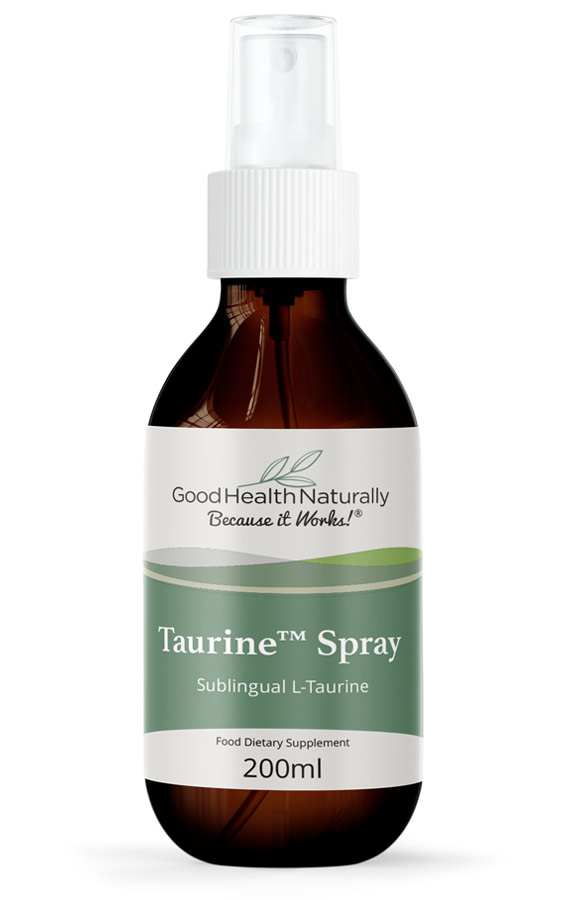
Taurine Spray
Oral spray providing taurine.