Are We Living Longer, Or Just Living Less Well?
We are living longer than previous generations. That much is true.
Yet increasingly, many of those extra years appear to be spent managing poor health, reduced mobility and chronic disease rather than enjoying vitality, independence and the freedom most of us imagine later life will bring.
This may be one of the least discussed health stories of our time.
Because while lifespan continues to rise, healthspan – the years spent active, independent and genuinely well – may quietly be moving in the opposite direction.
The Uncomfortable Numbers
- Healthy life expectancy in the UK has fallen by around 2 years over the last decade
- Healthy years now sit at roughly 61 years for both men and women
- In more than 90% of UK regions, healthy life expectancy now falls below retirement age
Source: Health Foundation analysis on healthy life expectancy trends in the UK
Although this research comes from the UK, the wider picture is unlikely to feel unfamiliar to many readers elsewhere. Across much of the developed world, rates of obesity, metabolic dysfunction, type 2 diabetes and chronic inflammatory disease continue to rise, even as medicine becomes increasingly effective at keeping people alive for longer.
In other words, we may be becoming better at extending life, while struggling rather more with preserving the quality of those later years.
This is why researchers are paying increasing attention to healthspan, a concept that asks not simply how long we live, but how well we live for those years.
Most people are not hoping simply to reach old age. They want to remain mentally sharp, physically capable and independent enough to enjoy the life they have built.
There is unlikely to be one single explanation for why healthy life expectancy appears to be stagnating or declining. Modern diets have changed dramatically in a relatively short space of time. Ultra-processed foods now make up a significant proportion of calorie intake in many countries and increasingly sedentary lifestyles are combining with poor sleep, chronic stress and low levels of physical activity in ways that human biology may simply not be especially well adapted to handle.
The more encouraging part is that many of the strongest predictors of healthy ageing are not futuristic interventions or expensive treatments, but the everyday foundations we return to repeatedly, including movement, muscle, diet quality and metabolic health.
One of the Biggest Predictors of Healthy Ageing? Muscle
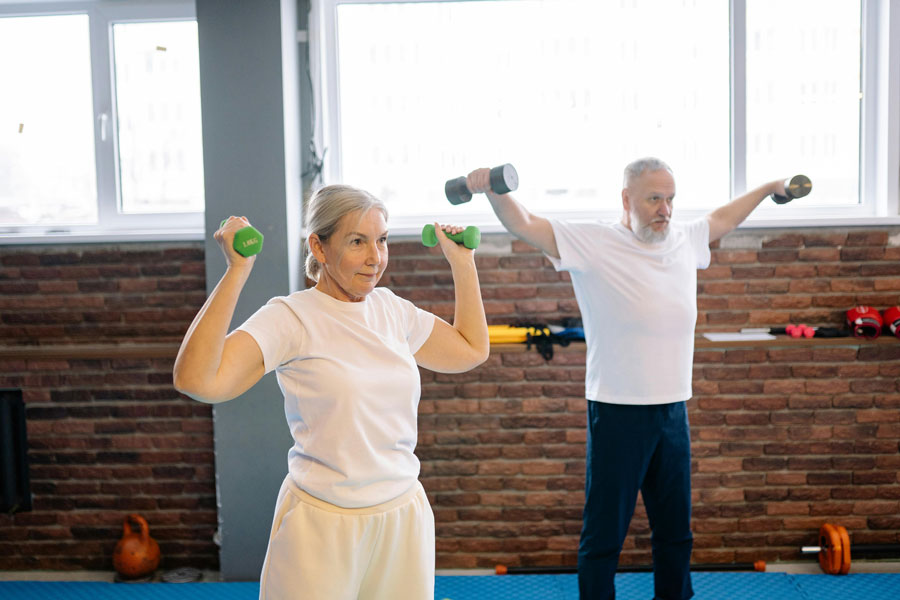
When many people think about ageing, they tend to focus on wrinkles, body weight or slowing metabolism. Yet one of the strongest predictors of how well we age may be something far more fundamental: maintaining muscle mass and strength over time.
Age-related muscle loss, known as sarcopenia, is increasingly recognised as a major contributor to frailty, reduced mobility, loss of independence and poorer resilience later in life. Muscle tissue also plays an important role in metabolic health, balance, recovery from illness and maintaining physical function as we get older.
This is one of the reasons why movement becomes increasingly important with age, particularly resistance exercise, walking and adequate protein intake.
In our recent article, we explored this topic in more detail, including why muscle loss appears to accelerate with age and some of the nutritional factors now being discussed in healthy ageing research.
Read more: Krill Oil and Sarcopenia: Why Muscle Loss Accelerates with Age
Interestingly, there is growing discussion around the role omega-3 fats may play in healthy ageing, particularly phospholipid forms naturally found in krill oil, alongside factors such as exercise and sufficient protein intake.
Healthy Ageing Is Built on Small Daily Habits
One piece of research I came across recently explored something surprisingly simple: olive oil.
While there is no single ‘anti-ageing’ food or nutrient, some dietary habits appear repeatedly in research looking at long-term health and cognitive function, and olive oil continues to attract interest.
In this particular study, people consuming higher amounts of extra virgin olive oil appeared to show better preservation of cognitive function over time, with researchers suggesting this may partly relate to beneficial effects on the gut microbiome and inflammation pathways.
It is another reminder that quality matters and that not all fats are equal. More heavily refined oils lose many of the naturally occurring polyphenols and plant compounds that make extra virgin olive oil nutritionally interesting in the first place.
Why Creatine Is Now Being Discussed
Beyond the Gym
Another area I seem to be coming across increasingly often in healthy ageing research is creatine.
For years, creatine was largely associated with sports performance and gym culture. Yet increasingly, researchers are exploring its potential role in muscle maintenance, energy production, physical resilience and even cognitive health as we age.
While research is still evolving, it is an interesting reminder that some nutrients once viewed through a very narrow lens are now being reconsidered in the context of ageing well.
Explore: Creatine Monohydrate
Perhaps the bigger question is no longer simply how long we live.
It is whether we arrive at later life strong, mobile, mentally sharp and still able to enjoy it.
Because longevity sounds impressive.
But healthspan may be the number that matters most.
A quick question before next week’s issue
When you think about ageing well, what concerns you most?
Energy? Mobility? Memory? Joint health? Maintaining independence?
Hit reply and let us know. We read every response and it helps shape future Naturally Healthy News topics.