
By Lindsay Powers | Nutritional Therapist & Health Writer, Naturally Healthy News
Published: July 2026 | Last reviewed: July 2026
Menopause brings a wide range of changes, and for many women, mood swings, anxiety, low mood and hot flushes are among the most disruptive. With growing interest in non-hormonal options, saffron has emerged as one of the more closely studied natural compounds for menopausal symptoms. But what does the clinical evidence actually show, and where are its limits?
Quick Summary
- Saffron has been studied in several clinical trials specifically involving menopausal and perimenopausal women
- The strongest evidence supports mood, anxiety and general wellbeing, rather than hot flushes
- One trial in women with diagnosed depression and hot flushes found that saffron improved both
- A 2026 trial found benefits for mood, self-esteem and sleep-related impairment in women aged 50-70
- Effects are typically seen within 6 to 12 weeks of consistent use
- Saffron is not a substitute for HRT or antidepressant medication where these are clinically needed
Why Look at Saffron for Menopause?
The hormonal shifts of perimenopause and menopause can affect neurotransmitter activity, sleep and emotional regulation, alongside physical symptoms like hot flushes. Common treatment options include hormone replacement therapy (HRT) and antidepressants, both of which are effective but carry risks of side effects and, in the case of HRT, are not suitable or wanted by every woman.
This has driven interest in saffron (Crocus sativus), a spice already well studied for its effects on mood and anxiety, as a potential complementary option during this transition.
Saffron and Mood During Perimenopause
The most robust early evidence for saffron in menopause comes from a 12-week randomised, double-blind, placebo-controlled trial in 86 perimenopausal women. Participants took a standardised saffron extract (affron®) or a placebo twice daily. By week 12, the saffron group showed a 33% reduction in anxiety symptoms and a 32% reduction in depressive symptoms, both significantly greater than the placebo group’s changes. Negative mood, as measured by a validated affect scale, also improved significantly more in the saffron group. [1]
Importantly, this same trial found no significant difference between saffron and placebo for vasomotor symptoms such as hot flushes and night sweats. In other words, in this particular study, saffron’s benefit was specific to mood, not physical menopausal symptoms. [1]
Saffron and Hot Flushes: A More Complex Picture
A separate six-week trial looked specifically at postmenopausal women with major depressive disorder who also experienced hot flushes. Sixty women took either 30mg of saffron daily or a placebo. By the end of the trial, saffron was associated with significantly greater improvements in both hot flush-related interference and depressive symptoms compared to placebo. [2]
The difference between this result and the earlier trial likely comes down to the population studied. This trial recruited women with a clinical diagnosis of depression and more frequent, severe hot flushes. However, the perimenopausal mood trial recruited women with milder, self-reported climacteric symptoms. This suggests saffron’s effect on hot flushes may be more apparent in women with more pronounced symptoms to begin with, though this remains an area needing further research. [1] [2]
New Research: Saffron for Mood, Self-Esteem and Sleep-Related Impairment
A 2026 trial published in Frontiers in Nutrition looked specifically at women aged 50 to 70 experiencing both low mood and poor sleep, the large majority of whom were postmenopausal. Over 12 weeks, women taking 28mg of Affron® daily saw depression scores fall by 50.7%, compared with 31.9% in the placebo group. Almost half of the saffron group reached a clinically meaningful improvement, compared with roughly a quarter on placebo. [4]
The trial also explored two areas not previously studied in relation to saffron: self-esteem and sleep-related impairment (the day-to-day effects of poor sleep, such as tiredness and difficulty concentrating, as distinct from sleep quality itself). Both improved significantly more in the saffron group. However, the trial found no significant difference between saffron and placebo for general sleep disturbance or self-rated physical appearance, and the authors made it clear that the self-esteem and sleep-impairment findings are exploratory and need to be confirmed in larger studies. [4]
This trial was funded by Pharmactive Biotech Products, the manufacturer of Affron®, which was also involved in the initial study design. The authors state that data analysis was conducted independently. This is worth knowing, given that Affron® is also the extract in the Saffron Balance product mentioned later in this article.
To put the depression findings in perspective, the study authors calculated a number needed to treat of approximately 4.3, meaning that for roughly every four to five women taking saffron, one additional person would see a clinically meaningful improvement beyond what would have happened with a placebo alone. [4]
Saffron and General Wellbeing After Menopause
A further trial examined saffron in a more everyday form: herbal tea. Seventy-two postmenopausal women were randomised to drink a daily cup of saffron tea (30mg of dried saffron stigmas) or a control, for six weeks. Using a validated happiness questionnaire, the saffron group’s scores rose significantly compared with the control group, whose scores did not meaningfully change. [3]
While this trial did not use a standardised extract, it adds to a consistent pattern across the available research: saffron appears to support mood and general psychological wellbeing during and after the menopausal transition. [3]
What This Means in Practice
Based on the current evidence, saffron looks most promising for:
- Low mood and anxiety during perimenopause
- General psychological wellbeing in postmenopausal women
- Hot flushes specifically in women with more severe, frequent symptoms alongside depression
- Sleep-related impairment (though not necessarily overall sleep quality)
It is not yet established as an effective standalone treatment for mild-to-moderate hot flushes in the general perimenopausal population, and should not be seen as a replacement for HRT or antidepressant medication where these are clinically indicated. As with any supplement during menopause, it’s worth discussing saffron with a GP or qualified healthcare provider, particularly if you’re taking other medications.
What to Look for in a Saffron Supplement
Not all saffron products are equal, and the clinical trials discussed above used specific standardised extracts rather than cooking-grade saffron threads. When choosing a supplement, it’s worth checking for:
- A standardised extract, rather than generic saffron powder, so the active compound content is consistent between batches
- A stated percentage of active compounds (such as Lepticrosalides®, which includes crocins and safranal), rather than just “saffron extract” on the label
- Third-party testing or a Certificate of Analysis, confirming purity and potency
- A dose in line with clinical research, typically 28-30mg daily, since much lower doses haven’t been studied for these effects
Cooking-grade saffron, while delicious, is unlikely to deliver these effects at the amounts typically used in recipes.
Final Thoughts: Saffron a Promising Solution
Saffron’s evidence base for menopause has grown substantially in recent years, and the picture that emerges is a genuinely useful one, particularly for mood, self-esteem and the day-to-day impact of poor sleep. What it isn’t, at least based on current research, is a reliable standalone fix for hot flushes in the general perimenopausal population.
For women navigating the emotional side of menopause who are looking for a well-studied, non-hormonal option, saffron is one of the more evidence-backed choices available. As with any change to your routine during this stage of life, it’s worth having that conversation with a healthcare professional, both to check saffron is a good fit for you, and to make sure it complements rather than replaces any treatment you’re already on.
Frequently Asked Questions
Can saffron help with menopause hot flushes?
The evidence is mixed. One trial in women with diagnosed depression and frequent hot flushes found saffron significantly improved both symptoms. However, a separate trial in perimenopausal women with milder symptoms found no significant benefit for hot flushes specifically, only for mood. Saffron’s effect on hot flushes may depend on the severity of symptoms.
How much saffron is used in research on menopause?
Trials have used doses ranging from 28-30mg daily, either as a standardised extract taken twice daily or, in one study, as a herbal tea made from dried saffron stigmas. Standardised extracts are generally preferred for consistent dosing, since saffron’s active compound content can vary considerably between products.
How long does it take for saffron to help with menopause symptoms?
Clinical trials have shown measurable improvements in mood within 6 weeks, with continued benefit seen by 12 weeks in longer trials. Most improvement in mood-related symptoms appeared to occur within the first month of consistent use.
Is saffron safe to take during menopause?
Across the trials discussed, saffron was generally well tolerated with no major adverse events reported. Mild digestive complaints were occasionally noted. As with any supplement, it’s worth speaking to a healthcare professional first, especially if you’re taking other medications or have an existing health condition.
Learning Hub
- Saffron Health Benefits: The Precious Spice for Body and Mind — the full guide to saffron’s benefits for mood, hormones, sleep and eye health
- Can Saffron Improve Sleep by Supporting Gut Health? — how a UK gut-brain axis trial links saffron to better sleep quality
References
[1] PMID 34463070 — Lopresti AL, Smith SJ. The Effects of a Saffron Extract (affron®) on Menopausal Symptoms in Women during Perimenopause: A Randomised, Double-Blind, Placebo-Controlled Study (J Menopausal Med, 2021): https://pmc.ncbi.nlm.nih.gov/articles/PMC8408316/
[2] PMID 29332222 — Kashani L, et al. Efficacy of Crocus sativus (Saffron) in Treatment of Major Depressive Disorder Associated with Post-Menopausal Hot Flashes (Arch Gynecol Obstet, 2018): https://pubmed.ncbi.nlm.nih.gov/29332222/
[3] PMID 37264347 — Delam H, et al. The Effect of Crocus sativus L. (Saffron) Herbal Tea on Happiness in Postmenopausal Women (BMC Complement Med Ther, 2023): https://pmc.ncbi.nlm.nih.gov/articles/PMC10233190/
[4] DOI 10.3389/fnut.2026.1838513 — Lopresti AL, Smith SJ. The Effects of a Saffron Extract (Affron®) on Mood, Sleep, Self-Esteem, and Exploratory Measures of Physical Appearance in Women Aged 50 to 70 Years (Front Nutr, 2026): https://www.frontiersin.org/journals/nutrition/articles/10.3389/fnut.2026.1838513/full
Disclaimer: The information in this article is intended for general informational purposes only and does not constitute medical advice. It is not a substitute for professional medical advice, diagnosis, or treatment. Always seek the advice of your GP or a qualified healthcare provider with any questions you may have regarding a medical condition. Never disregard professional medical advice or delay seeking it because of something you have read here.
Our Recommendations
Naturally Healthy News is part of the Good Health Naturally family of brands.
For those interested in exploring saffron further, Good Health Naturally’s Saffron Balance supplement is worth a look.
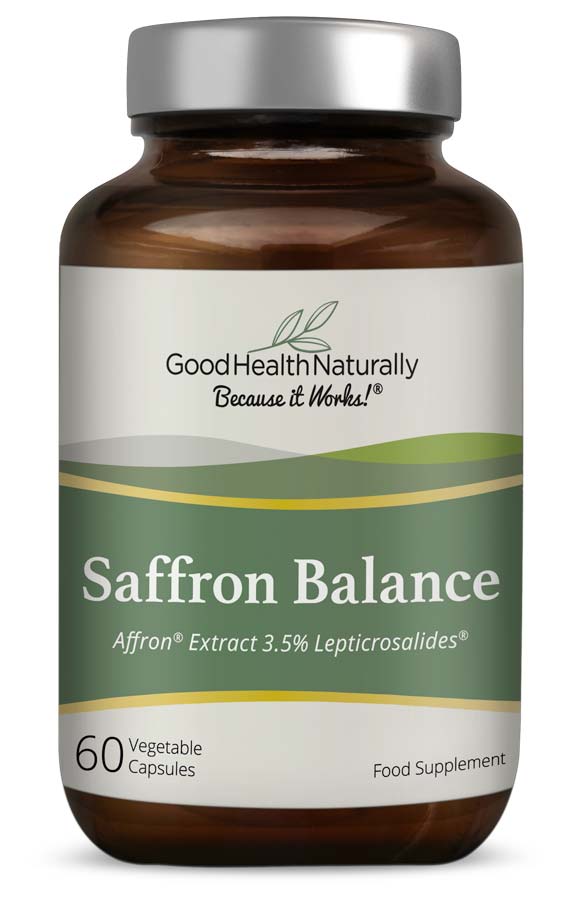
Formulated with Affron® saffron extract, Saffron Balance provides a premium, well-researched botanical in an easy-to-take daily capsule.