
By Lindsay Powers | Nutritional Therapist & Health Writer, Naturally Healthy News
Published: January 2026 | Last reviewed: August 2026
Age-related muscle loss, known as sarcopenia, is one of the most significant yet least discussed aspects of ageing. Unlike short-term muscle loss linked to dieting or illness, sarcopenia develops gradually over decades and can profoundly affect strength, mobility and independence in later life.
Sarcopenia is now recognised as a key contributor to frailty, falls and reduced quality of life. As populations live longer, understanding the nutritional and biological factors that influence muscle health has become increasingly important. This has led researchers to explore the role of omega-3 fatty acids, including those found in krill oil, in relation to muscle ageing.
Quick Summary
- Sarcopenia is progressive, age-related muscle loss driven by inflammation, mitochondrial decline and reduced anabolic sensitivity
- Ageing muscle becomes less responsive to protein and exercise, a phenomenon known as anabolic resistance
- Omega-3 fatty acids, particularly EPA and DHA, have been shown to help muscle respond more effectively to these signals
- Krill oil delivers omega-3s in a phospholipid-bound form, the same structural component as muscle cell membranes
- A six-month randomised controlled trial found krill oil improved knee extensor strength, grip strength and muscle thickness in older adults
What Is Sarcopenia?
Sarcopenia refers to the progressive loss of skeletal muscle mass, strength and function that occurs with ageing. It can begin as early as midlife and typically accelerates after the age of 60.
Unlike temporary muscle loss, sarcopenia reflects deeper biological changes, including:
- Reduced muscle protein synthesis
- Increased inflammation
- Impaired mitochondrial function
- Changes in muscle cell membranes
- Reduced neuromuscular signalling
Over time, these changes make it harder for muscle tissue to repair, regenerate and respond to physical activity.
Why Muscle Loss Accelerates with Age
Ageing muscle becomes less responsive to the signals that normally stimulate growth and repair. This phenomenon is often described as anabolic resistance.
In practical terms, this means that the same protein intake or activity level that once maintained muscle is often no longer enough as we age.
Several factors contribute to this reduced responsiveness:
- Chronic low-grade inflammation increases muscle breakdown
- Mitochondria become less efficient at producing energy
- Cell membranes lose flexibility, affecting nutrient transport
- Neuromuscular communication becomes less efficient
Together, these changes mean that even with adequate protein intake, older muscle may struggle to maintain strength without additional support from movement and targeted nutrition.
In Simple Terms
Sarcopenia develops because ageing muscle becomes less responsive to food and movement. Even when protein intake and activity levels stay the same, muscle tissue does not respond as efficiently as it once did.
This means that supporting muscle health with age is not just about eating more protein or exercising harder. It also involves maintaining the cellular systems that allow muscle cells to receive and act on those signals.
This is why nutrients that influence inflammation, cell membranes and mitochondrial function are increasingly being studied in relation to age-related muscle loss.
Omega-3 Fatty Acids and Muscle Ageing
Long-chain omega-3 fatty acids, particularly EPA and DHA, have been studied for their role in muscle metabolism for over a decade.
Research in older adults has shown that omega-3 supplementation can influence muscle protein synthesis, muscle strength and physical function. A well-known trial by Smith and colleagues found that EPA and DHA supplementation helped ageing muscle respond more effectively to protein and insulin, supporting the processes involved in muscle repair and maintenance. [1]
One reason this matters is that ageing muscle becomes less sensitive to normal growth signals. Omega-3 fatty acids appear to help amplify these signals, making muscle tissue more responsive to nutrition and movement.
Subsequent trials have linked omega-3 intake with improvements in grip strength, walking speed and lower-body function, even when changes in lean mass were modest. These findings highlight an important distinction between muscle function and muscle size, both of which matter for healthy ageing. [2]
What Makes Krill Oil Distinct in This Context
Krill oil provides EPA and DHA in a phospholipid-bound form, rather than the triglyceride form found in most standard fish oils.
This distinction is relevant because phospholipids are the same structural components that make up human cell membranes, including those of muscle cells. These membranes play a key role in how muscle tissue senses nutrients, responds to movement and adapts to stress.
Phospholipids influence:
- Membrane fluidity
- Nutrient transport
- Cellular signalling
- Mitochondrial efficiency
Because muscle cells rely heavily on membrane signalling to respond to food and activity, membrane composition becomes increasingly important with age.
Krill oil also naturally contains small amounts of choline, which forms the head group of phospholipids such as phosphatidylcholine. Choline plays a structural role in maintaining cell membrane integrity and neuromuscular signalling.
Evidence Linking Krill Oil to Muscle Outcomes
Clinical research specifically examining krill oil and muscle health is still emerging, but early findings are notable.
A six-month randomised controlled trial in older adults found that krill oil supplementation was associated with improvements in knee extensor strength, grip strength and muscle thickness compared with a control group. These functional changes occurred alongside significant increases in omega-3 index levels. A later secondary analysis of the same trial found these benefits held consistently regardless of participants’ age, sex or BMI. [3]
While this research does not demonstrate prevention or treatment of sarcopenia, it provides evidence that krill oil may support muscle function and structural integrity in ageing populations.
Mechanistic research using human muscle cells also supports plausible pathways, showing that krill oil can influence mitochondrial metabolism, fuel utilisation and protein synthesis pathways in muscle tissue. [4]
Sarcopenia Is About Function, Not Just Muscle Mass
One of the most important insights from recent research, however, is that sarcopenia is not solely about losing muscle size. Declines in strength, coordination and physical performance often occur before measurable reductions in lean mass.
These functional changes are what ultimately affect balance, confidence and independence in later life.
This helps explain why interventions that improve muscle quality, mitochondrial efficiency and neuromuscular communication may have meaningful effects on mobility and daily function, even if changes in muscle mass appear modest.
Omega-3 fatty acids, including those delivered in phospholipid form, are increasingly studied in this context because of their influence on inflammation, membrane dynamics and cellular signalling.
Nutrition as Part of a Wider Strategy
No single nutrient can address sarcopenia in isolation. Research consistently shows that preserving muscle with age requires a combination of:
- Regular resistance and strength-based movement
- Adequate protein intake distributed across the day
- Overall nutrient quality
- Support for cellular and mitochondrial health
Within this broader framework, krill oil is being explored as a complementary nutritional component that may help support muscle function and resilience as part of healthy ageing.
How This Fits into the Bigger Picture of Healthy Ageing
Sarcopenia does not occur in isolation. Muscle health is closely linked to balance, joint stability, metabolic health and cognitive function.
This article forms part of a wider healthy ageing series exploring how krill oil is being studied in relation to muscle, brain health and long-term mobility. For a broader perspective on how these systems interact over time, you may also find our article on krill oil and healthy ageing helpful.
Frequently Asked Questions
What is sarcopenia and how is it different from normal muscle loss?
Sarcopenia is the progressive, age-related loss of muscle mass, strength and function, distinct from the short-term muscle loss caused by dieting, illness or inactivity. It develops gradually, often starting in midlife, and reflects deeper changes in inflammation, mitochondrial function and how muscle cells respond to nutrition and movement.
Why does muscle loss speed up as we get older?
Ageing muscle becomes less responsive to the normal signals that trigger growth and repair, a state known as anabolic resistance. This means the same amount of protein or exercise that maintained muscle in younger years often isn’t enough later in life, due to increased inflammation, less efficient mitochondria and reduced neuromuscular signalling.
What makes krill oil different from regular fish oil for muscle health?
Krill oil delivers omega-3 fatty acids (EPA and DHA) in a phospholipid-bound form, rather than the triglyceride form found in most standard fish oils. Phospholipids are the same structural components that make up cell membranes, including those of muscle cells, which is why krill oil is of particular interest for membrane-related aspects of muscle ageing.
Does krill oil actually help with muscle loss in older adults?
Early clinical evidence is promising. A six-month randomised controlled trial found krill oil supplementation improved knee extensor strength, grip strength and muscle thickness in older adults compared with a control group, with benefits consistent across age, sex and BMI. This doesn’t prove krill oil prevents or treats sarcopenia, but it does support a role in muscle function and structural integrity.
Can nutrition alone prevent sarcopenia?
No single nutrient, including krill oil, addresses sarcopenia in isolation. Current research points to a combination of regular resistance-based movement, adequate protein intake spread across the day, and overall nutrient quality, with cellular-support nutrients like omega-3s playing a complementary rather than standalone role.
Final Thoughts
Age-related muscle loss is cumulative. The earlier muscle health is supported, the greater the potential to preserve strength, mobility and independence later in life.
While research into krill oil and sarcopenia is still developing, existing clinical and mechanistic evidence suggests it may play a supportive role within a broader, evidence-informed approach to healthy ageing. As understanding of muscle biology continues to evolve, attention is shifting away from quick fixes and towards long-term cellular resilience.
References
Disclaimer: The information in this article is intended for general informational purposes only and does not constitute medical advice. It is not a substitute for professional medical advice, diagnosis, or treatment. Always seek the advice of your GP or a qualified healthcare provider with any questions you may have regarding a medical condition. Never disregard professional medical advice or delay seeking it because of something you have read here.
Our Recommendations
Naturally Healthy News is part of the Good Health Naturally family of brands.
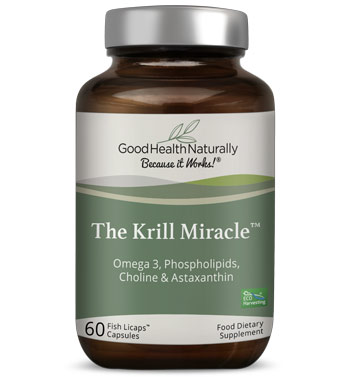
The Krill Miracle is a phospholipid-bound krill oil supplement, the same form of omega-3 discussed throughout this article, available from Good Health Naturally.